Keeping Water Moving and Treatment on Track
Did You Know?
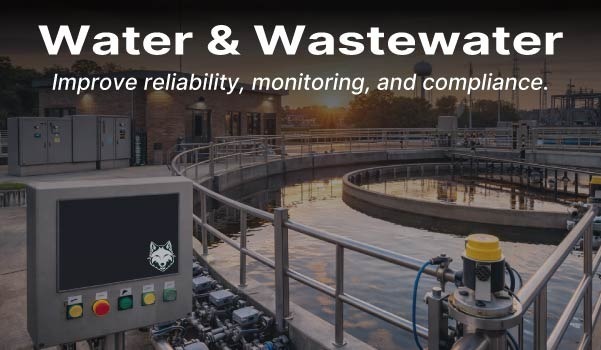
From moving millions of gallons of water to controlling pumps, blowers, chemical dosing, and treatment processes, there's a lot happening behind the scenes at water and wastewater facilities.
Facilities benefit from real-time monitoring, lower chemical and energy costs and remote control capabilities, all while supporting regulatory compliance and reducing manual error.
34 Billion Gallons
U.S. wastewater treatment plants process roughly 34 billion gallons of wastewater every day.
90% Removed
Treatment plants can remove more than 90% of contaminants before treated water is returned to the environment.
When it Rains, It Pours
In some older combined sewer systems, heavy rain can overwhelm capacity and lead to untreated wastewater being discharged into waterways.
Blogs Just For You

Typical Use Cases in Water & Wastewater Treatment

Chemical Dosing Automation
Chemicals are added during treatment for processes like pH adjustment and disinfection. Automation controls pumps and dosing equipment to deliver the correct amount consistently.

Primary & Secondary Treatment Control
Water moves through multiple treatment stages to remove solids and contaminants. Controls coordinate equipment like mixers, clarifiers, pumps, and blowers throughout the process.

Sludge Handling & Dewatering
Solids removed during treatment still need to be pumped, moved, and processed. Automation controls pumps, conveyors, and dewatering equipment to keep the process moving.

Remote Monitoring & Alarms
Treatment equipment can be spread across a plant, or miles apart. Remote monitoring gives operators visibility into equipment status, levels, alarms, and faults without constantly checking each location.

Lift Station/Pump Station Automation
Pump and lift stations move water or wastewater when gravity alone can't get it where it needs to go. Controls automatically start, stop, and adjust pumps based on level, pressure, and demand.

Aeration Blower Control & Dissolved Oxygen Optimization
Aeration provides oxygen that microorganisms need to break down organic material during biological treatment. Automation monitors dissolved oxygen and adjusts blower output to match what the process actually needs.
Water & Wasterwater Treatment Application Products
Chemical Dosing Automation
Featured Products:
Remote Monitoring & Alarms
Featured Products:
HMI | PLCs | Industrial Networking | Remote I/O | Stack Lights
Lift Stations & Pump Station Automation
Featured Products:
VFDs | Soft Starters | Motors | PLCs | Level & Pressure Sensors | HMI
Interested in our Water & Wastewater Newsletter?
Read Recent Water & Wastewater Issues Now:
Supporting Municipal & Industrial Water Automation Projects
Whether upgrading an aging lift station, building a new wastewater treatment plant, or improving energy efficiency in a municipal water system.
Our team helps engineers, contractors, and municipalities select the right automation products for reliable, long-term performance in demanding water and wastewater environments.
We supply the automation components needed for:
-Pump station control panels
-Municipal SCADA integration
-Water distribution system monitoring
-Wastewater aeration optimization
-Chemical feed automation systems
-Industrial wastewater treatment controls
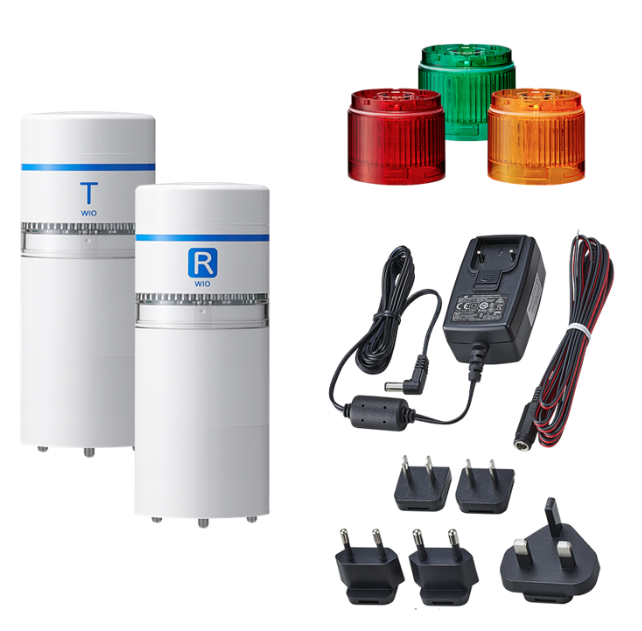
Stop Running Miles of Cable: Wireless Alerts
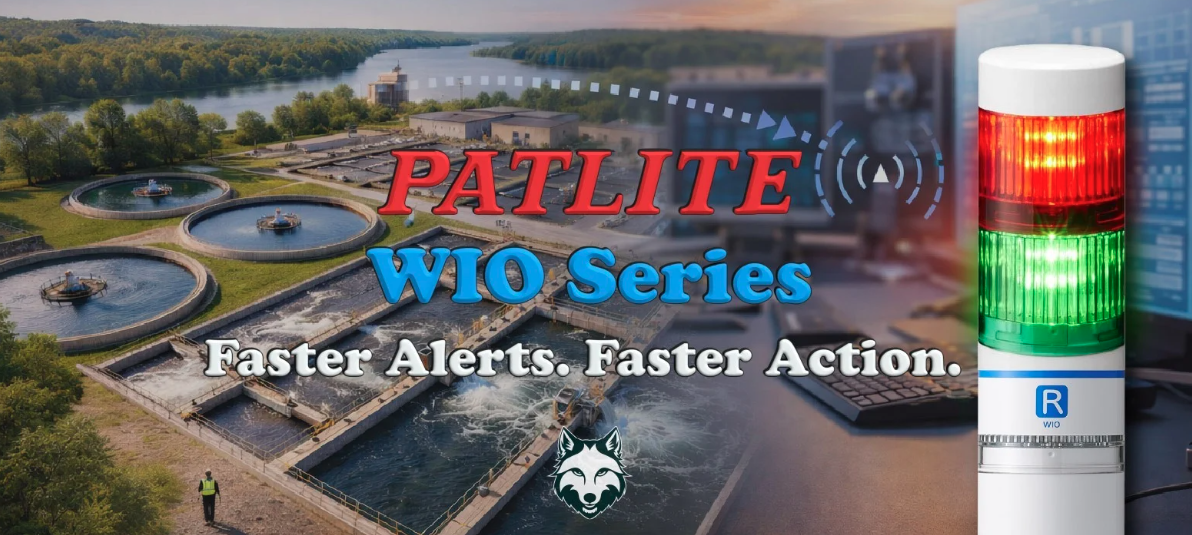
Water and wastewater facilities are often large, spread-out environments and need issues to be communicated quickly. Running long cables across a facility is costly and time-consuming, so what are your options?
The Patlite WIO-B1S-001 solves this by wirelessly transmitting alert signals from sensors directly to a control room or designated personnel. This gives you the rapid response you need without extensive wiring or routine walks around the plant.
A great example is a sensor detects an anomaly at a remote pump station or treatment tank. The WIO immediately notifies the control room operator; no one has to physically walk the environment to catch it.
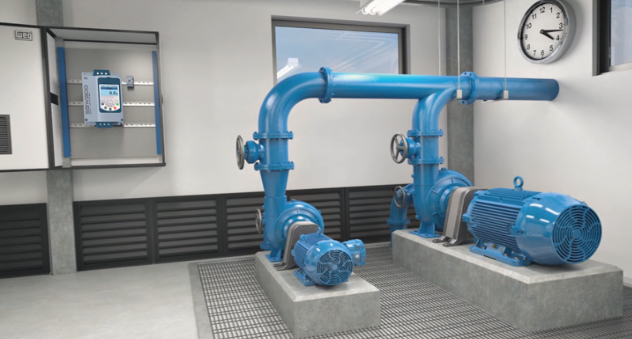
Soft Starts for Water & Wastewater Pump Systems
When pump systems start running rough, the warning signs usually show up long before a failure.
Do you notice hard motor starts? Pressure spikes in the line? Unexpected vibration? Valves slamming shut during shutdown?
In water and wastewater systems, sudden motor starts can create inrush current, mechanical stress, and even water hammer that travels through the entire pipeline.
Over time, that stress can lead to premature seal wear, coupling failures, and increased maintenance calls.
Learn how soft starters can help you avoid this!
Additional Water & Wastewater Treatment Blogs For You: