
-
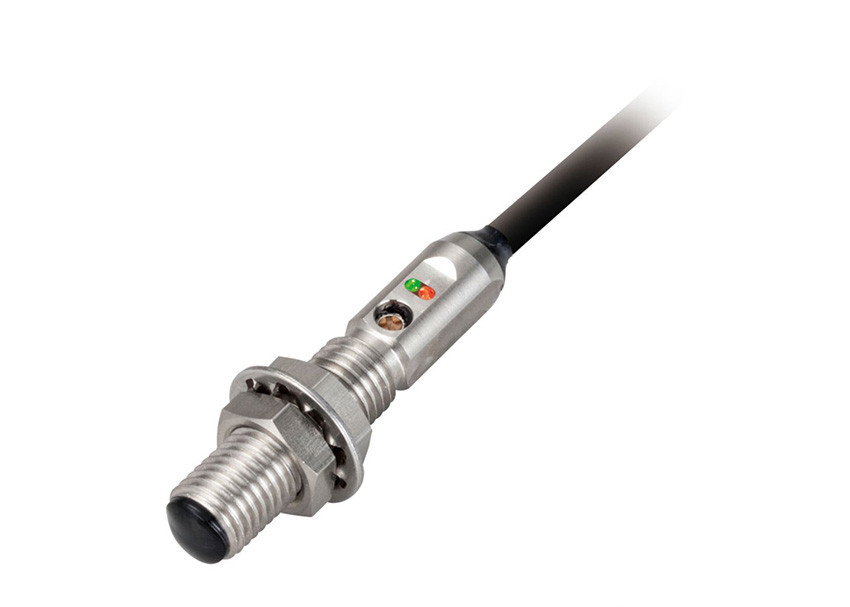
Takex
UX3-R5V
Photoelectric Sensor, Ultra-Extreme Miniature, 12-24VDC, 20mA, Diffuse Reflective, NPN Output, Light On, Infrared LED, 3 to 50mm Detecting Range, Embedded Amplifier, Cable, IP67
$116.03$116.03 -

Takex
UX3-R5VPN
Photoelectric Sensor, Ultra-Extreme Miniature, 12-24VDC, 20mA, Diffuse Reflective, PNP Output, Light On, Infrared LED, 3 to 50mm Detecting Range, Embedded, Cable, IP67
$116.03$116.03
Photoelectric sensors detect the distance, absence or presence of an object. These sensors are great for sensing long distances and detecting most materials.
How Does a Photoelectric Sensor Work?
Generally a photoelectric sensor consists of the following:
- Transmitter - emits the light beam
- Receiver - detects the light beam and converts it to an electrical signal
Photoelectric sensors detect changes in the light beam caused by the presence/absence, movement or properties of an object.
Types of Photoelectric Sensors:
- Through-Beam (Thru-Beam)
- Transmitter and receiver are two separate units that are directly opposite of each other. The sensor detects when an objects breaks the light beam
- Great for long distance detection
- Ideal for conveyors, counting or monitoring door openings
- Retroreflective (Reflective Mode)
- Transmitter and receiver are in one housing; light beam is reflected back by a reflector. Detection is triggered when an object breaks the beam.
- Medium range detection and easier to install than a through beam
- Ideal for package detection and pallet positioning
- Diffuse (Proximity Mode)
- The transmitter and receiver in one housing; the sensor detects light reflected directly off the target object (no reflector needed)
- Best for short range applications
- Ideal for detecting objects on assembly lines, verifying presence or checking fill level
- Specialized Types:
- Background Suppression: Can ignore objects beyond a set distance, focuses close range
- Color or Contrast Sensors: Detects specific colors or contrast differences
- Distance Measuring Sensors: Mesaure the distance to an object
Categories Related to Photoelectric Sensors:
- Stack lights - signal towers visually communicate the data or alerts that the photoelectric sensors are generating
- Smart relays - photoelectric sensors provide input signals which can process the data and control outputs
- Pushbuttons and estops - if your sensor detects a fault, an operator can use a pushbutton to reset the system
- HMIs - HMIs can dispay the data from the photoelectric sensor which allows you to monitor processes