
Stack Light Protocols, What They All Mean
Posted by Theresa Hoffman on Jul 30th 2025
We've all seen text message shortcuts like OMG, HBU, ATM, or LMK (take a second to decode those if you need!).
But in the world of industrial technology, abbreviations like OPC, TCP, and AS-i can be just as confusing. Stack lights—those colorful indicator lights used in factories to show machine or process status—are simple to assemble, yet they rely on sophisticated communication protocols to function in modern automation systems.
Let’s break down what these protocols mean and how they work with stack lights.
What They All Mean
Modbus Transmission Control Protocol (Modbus TCP)
Modbus TCP is a popular protocol used in automation to control devices over a network. It uses standard Ethernet (like your internet connection) to communicate with devices such as Programmable Logic Controllers (PLCs), sensors, and stack lights.
Video: Teltonika Networks
How It Works with Stack Lights: Each segment of a stack light (e.g., red, yellow, green) is assigned to a specific holding register (think of it as a labeled slot in the system):
- Register 40001 controls the red light (1 = on, 0 = off).
- Register 40002 controls the yellow light.
- Register 40003 controls the green light, and so on.
For more advanced setups, a single register can control multiple lights using bit-level control. For example, bit 0 might control the red light, bit 1 the yellow light, etc. Writing a value like 5 (binary 0101) could turn on both red and green lights.
Why It’s Great: It’s straightforward—just send a number to a register to control a light. It’s like texting a command to the stack light!
Protocol Difficulty: Simple, plug-and-play. Ideal for beginners or small setups.
EtherNet Industrial Protocol (EtherNet/IP)
EtherNet/IP is a protocol that uses standard Ethernet to control devices like stack lights, similar to how your computer connects to the internet.
How It Works with Stack Lights: The stack light plugs into an Ethernet network with a cable and gets an IP address (e.g., 192.168.1.10).
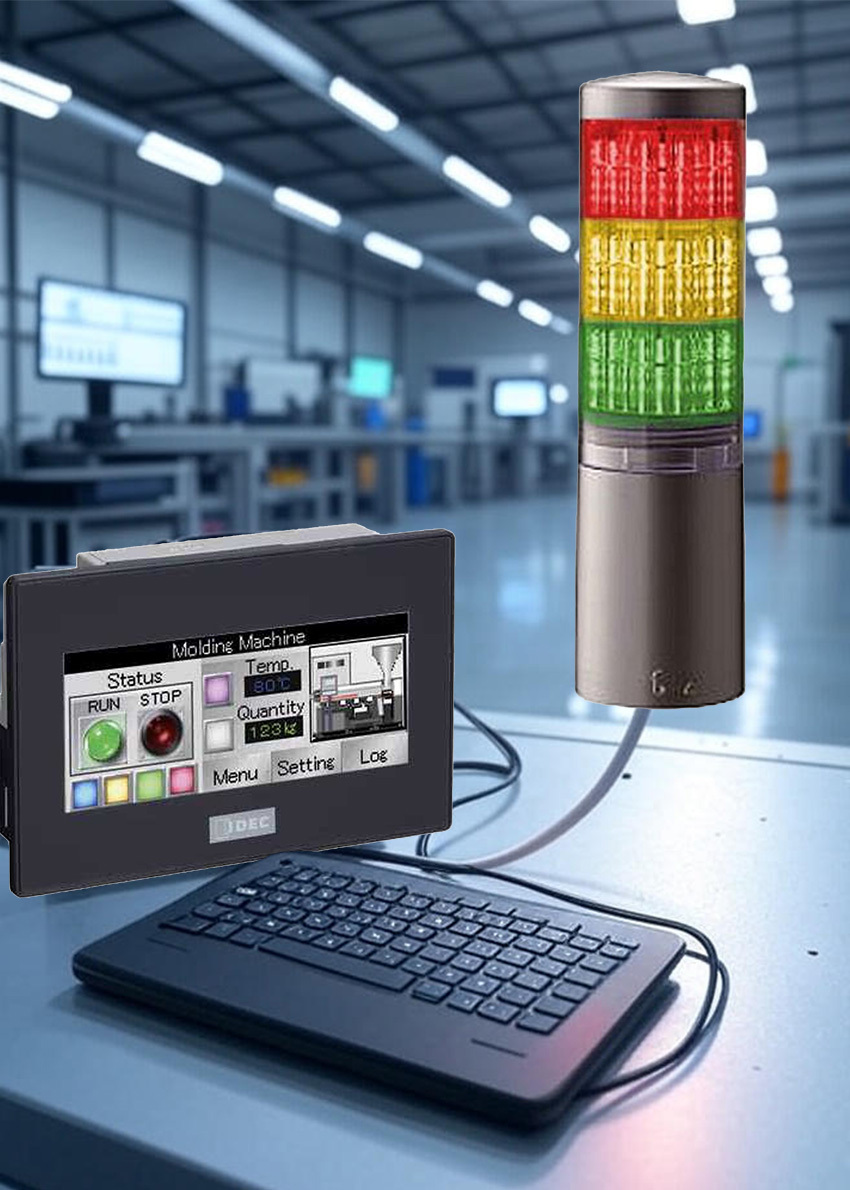
A controller, like a PLC, sends commands over the network to turn lights on or off. Each light segment (red, green, etc.) is treated like a "button" you can control remotely. There are two types of commands:
- Fast (real-time): Instantly turns lights on/off (e.g., red for a machine fault).
- Slower (setup/info): Changes settings (e.g., make a light flash) or checks status.
Why It’s Great: One Ethernet cable controls everything, and you can manage stack lights from anywhere in the factory. It’s powerful for large systems.
Protocol Difficulty: Moderate. You need basic networking knowledge and PLC software. It’s trickier than Modbus TCP but manageable with training.
IO-Link
IO-Link is a simple, standardized way to connect and control devices like stack lights using a single cable that carries both power and data.
How It Works with Stack Lights: Plug the stack light into an IO-Link master (a hub that talks to the PLC) with a standard cable. The controller sends commands like "turn on the green light" or gets feedback like "the red light is on."
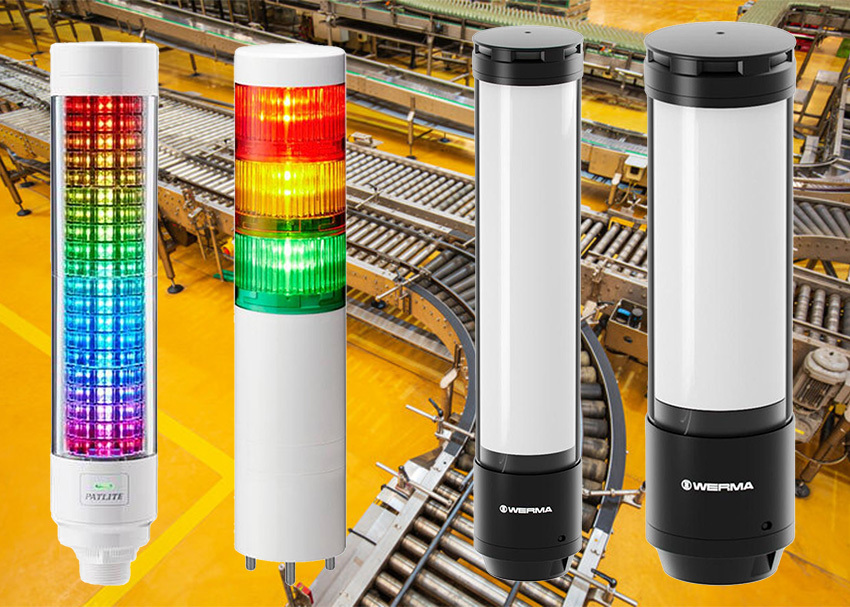
Why It’s Great: It’s like plugging in a USB device—one cable does it all, and it’s super easy to set up or replace devices.
Protocol Difficulty: Simple, plug-and-play. Perfect for small systems or beginners.
AS-Interface (AS-i)
AS-Interface, or AS-i, is a simple, low-cost protocol for connecting devices like stack lights to a controller using a single two-wire cable.
How It Works with Stack Lights: The stack light connects to an AS-i network with a special flat cable that provides both power and data.
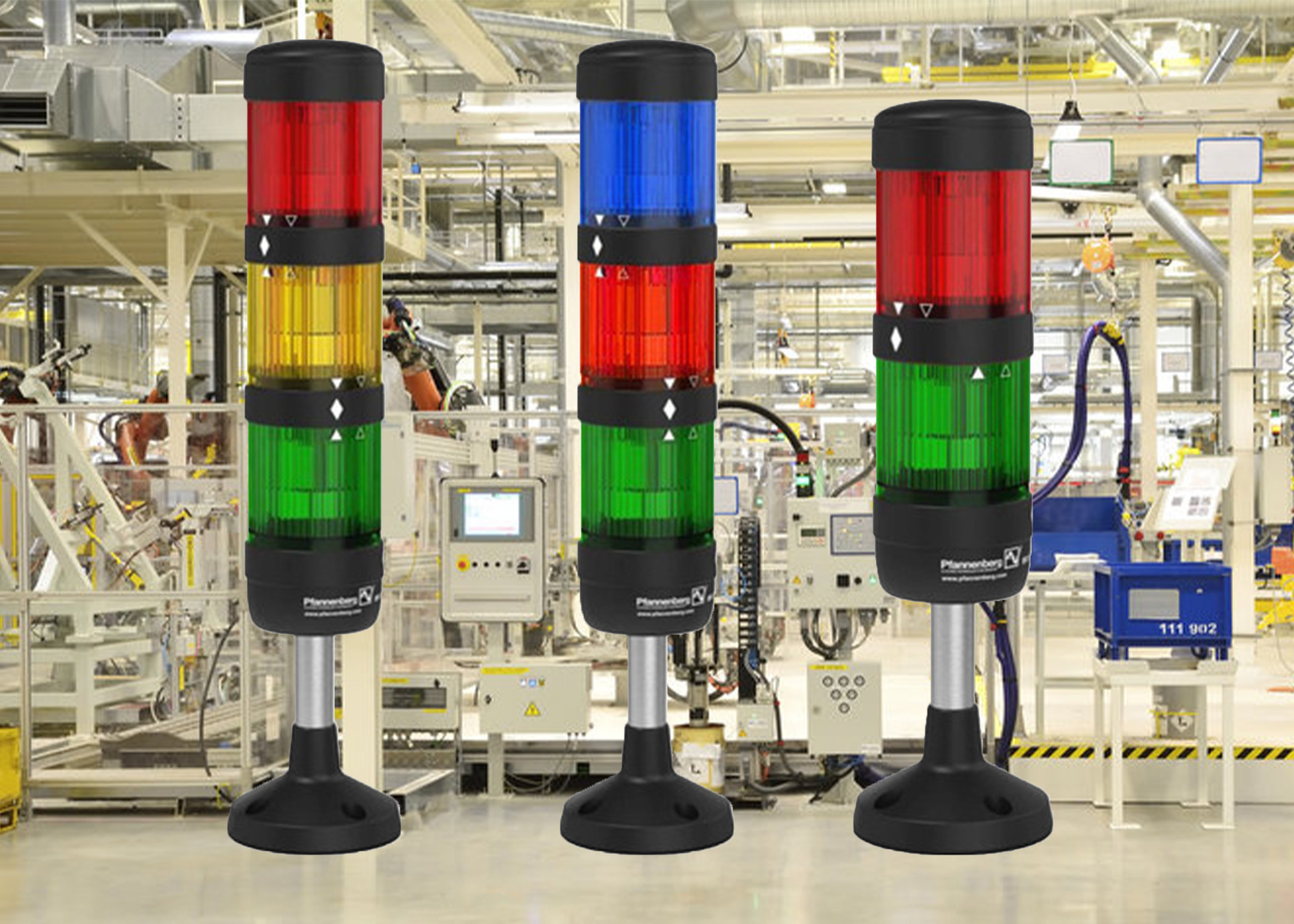
The controller (e.g., a PLC) sends basic commands to turn light segments on or off (e.g., green for running, red for stopped). Each stack light is assigned a unique address (like a phone number) so the controller knows which device to talk to.
Why It’s Great: The two-wire cable is easy to install and reduces wiring costs. It’s ideal for simple applications where you don’t need a full Ethernet network.
Protocol Difficulty: Simple, plug-and-play. Similar to IO-Link, it’s easy to set up, but it’s limited to basic control compared to EtherNet/IP or Modbus TCP.
Stack lights may look like simple colored lights, but their ability to communicate with controllers using protocols like Modbus TCP, EtherNet/IP, IO-Link, and AS-i makes them powerful tools in industrial automation. For small, straightforward setups, IO-Link or AS-i are the easiest options, requiring minimal wiring and setup.
For larger, networked systems, Modbus TCP offers simplicity with Ethernet flexibility, while EtherNet/IP provides advanced control for complex factories, though it requires more networking know-how. Choosing the right protocol depends on your system’s size and needs, but each one makes controlling stack lights efficient and effective. Next time you see a stack light flashing, you’ll know there’s some smart tech behind those colors!