
Get Real-Time Heat Index Monitoring With Novus Climate Air+
Posted by Theresa Hoffman on Aug 7th 2025
Heat index has become a critical metric that is reshaping how we think about the workplace. When the heat index climbs, safety risks increase, especially for workers engaged in heavy physical activity.
For employers, the heat index represents both a challenge and an opportunity. By implementing work practice modifications and providing appropriate safety equipment, employers can proactively address heat illness prevention and keep their employees healthy.
Here is re-post of Novus blog: Understanding the Heat Index: Why It Matters and How to Monitor It Effectively
High temperatures and excessive humidity pose serious risks to workers exposed to heat, whether outdoors or in industrial environments. In recent years, the rise in heat stress cases has led U.S. regulatory agencies to establish specific rules to monitor and mitigate these risks.
Among these rules, the requirement to track the Heat Index stands out as a key measure to protect workers’ health. In this article, we explain what the Heat Index is, why it’s required in the U.S., and how NOVUS helps your company meet this requirement efficiently and reliably.
What is the Heat Index?
The Heat Index is an indicator that combines air temperature with relative humidity to show the actual thermal sensation experienced by the human body.
When humidity is high, sweat evaporates more slowly, making it harder for the body to cool itself. So even if the thermometer reads 32 °C (90 °F), for example, the perceived temperature can easily exceed 40 °C (104 °F) in a humid environment, increasing the risk of exhaustion, dehydration, and other serious issues.
That’s why the Heat Index is used as a reference to determine when measures like breaks, hydration, and reduced work pace should be implemented.
Why the Heat Index Is Especially Important in the U.S.
Heatwaves are becoming more frequent and intense in many parts of the United States, especially in the South, Midwest, and coastal regions.
These conditions significantly increase health risks in industries such as:
- Construction
- Manufacturing
- Logistics and warehousing
- Agriculture
According to the U.S. Bureau of Labor Statistics, dozens of workers die from heat exposure every year, and thousands more suffer from heat-related illnesses.
OSHA – Occupational Safety and Health Administration
- Promotes the Heat Illness Prevention Campaign
- Encourages monitoring of environmental conditions
- Recommends providing water, rest, and shade
- While not yet a formal federal regulation, OSHA can cite employers under the General Duty Clause for exposing workers to excessive heat.

NIOSH – National Institute for Occupational Safety and Health
- Offers criteria for occupational exposure to heat and humidity
- Defines thresholds for “caution,” “danger,” and “extreme danger”
NOAA/NWS – National Weather Service
- Publishes the official Heat Index chart
- Categorizes risk levels

How to Monitor the Heat Index in Practice
Continuously and accurately monitoring temperature and humidity is essential to ensure workers’ safety and comply with regulations. This monitoring must be reliable, even in critical environments like warehouses, factories, construction sites, and outdoor areas.
It’s also crucial to have systems that immediately alert the team when levels exceed acceptable limits so that they can react quickly.
How Climate Air+ Helps
The Climate Air+ from NOVUS is the ideal solution for real-time Heat Index monitoring, delivering high precision and reliability.
Designed for critical environments, the Climate Air+ combines temperature and humidity sensors with long-range wireless communication, allowing the Heat Index to be calculated automatically and monitored remotely.
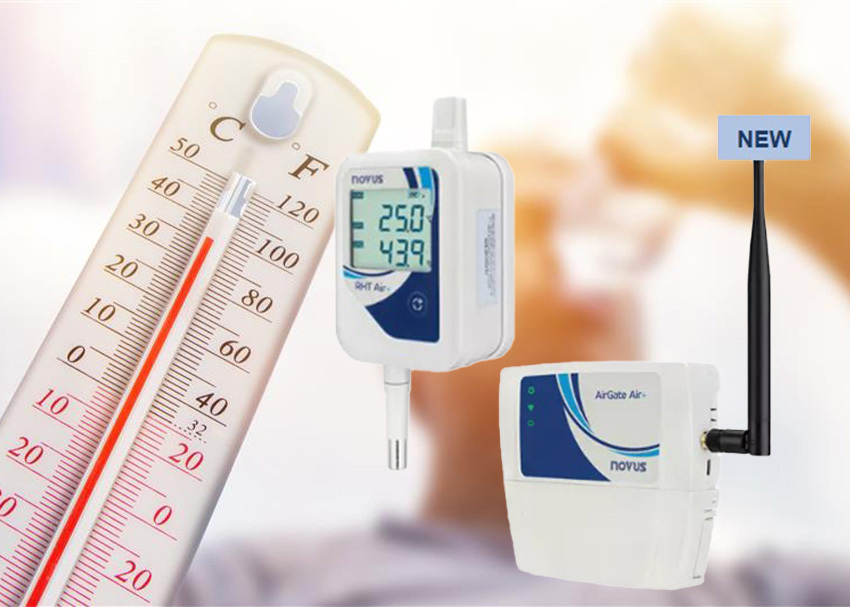
- High-precision temperature and humidity measurements
- Automatic Heat Index calculation
- Remote monitoring via LoRa communication
- Configurable alarm for critical situations
- Data logging for audits and compliance
- Simple, scalable installation for different environments
In addition to helping protect workers’ health, the Climate Air+ makes it easier to meet legal requirements, prevent penalties, and enhance your company’s reputation with clients and authorities.
Example: Real Data from Climate Air+
- Temperature: 33.2 °C (91.8 °F)
- Humidity: 66%
- Heat Index: 42.1 °C (107.8 °F) → Extreme Caution Zone
This enables quick decisions, such as scheduling breaks, adjusting ventilation, or issuing alerts to teams in the field.
Protecting workers’ health is more than a legal obligation; it’s a moral commitment.
With Climate Air+, your company demonstrates responsibility, ensures team safety, and optimizes processes, all while remaining compliant with current regulations.
Marshall Wolf Automation is an authorized Novus distributor. Contact us for more details about how the Climate Air+ can keep your work environment safe.